
FLECS – Tidal power
The Business Research Company’s 2026 report on Tidal Energy summarises the sector. “Tidal energy, also known as tidal power, is a form of renewable energy that harnesses the movement of water caused by the gravitational pull of the moon and the sun on Earth’s oceans. This energy is generated by capturing the kinetic and potential energy from the rise and fall of ocean tides. It can be converted into electricity using various technologies, such as tidal stream turbines and barrages. Tidal energy is predictable and sustainable, as tides are regular and cyclic, making it a reliable source of clean energy. The main types of methods in tidal energy are tidal stream, tidal barrage, tidal turbine, and others. Tidal stream technology involves the use of underwater turbines or similar devices that capture the energy from the flow of tidal currents. These systems come in different capacities, such as up to 100 kW, 100 kW to 500 kW, and above, and can be installed at varying depths, including shallow, transitional, and deep waters. They are commonly used in applications like power generation and desalination. The tidal energy market size is expected to see exponential growth in the next few years. It will grow to $3.66 billion in 2030 at a compound annual growth rate (CAGR) of 21.1%. The growth in the forecast period can be attributed to increasing renewable energy capacity targets, rising investments in marine energy commercialization, expansion of coastal grid infrastructure, growing focus on energy security, advancements in tidal turbine efficiency.”
SubConnected FLECS system has been specifically designed for this rapidly growing market for renewable energy developers. Working in fast flowing waters, up to 4m per second, the strain on cables and connections are immense and the tide reverses direction every 6 hours.
The SubConnected AB Floating Energy Connection System – FLECS is designed to cope with the movement in all sea conditions. The super dynamic cables flex and absorb the movement between the turbine and the connection spar hub. The dynamic cables link the device and the hub to the grid. With spiral design and less than 80mm to reduce drag and handle the harsh sea conditions.
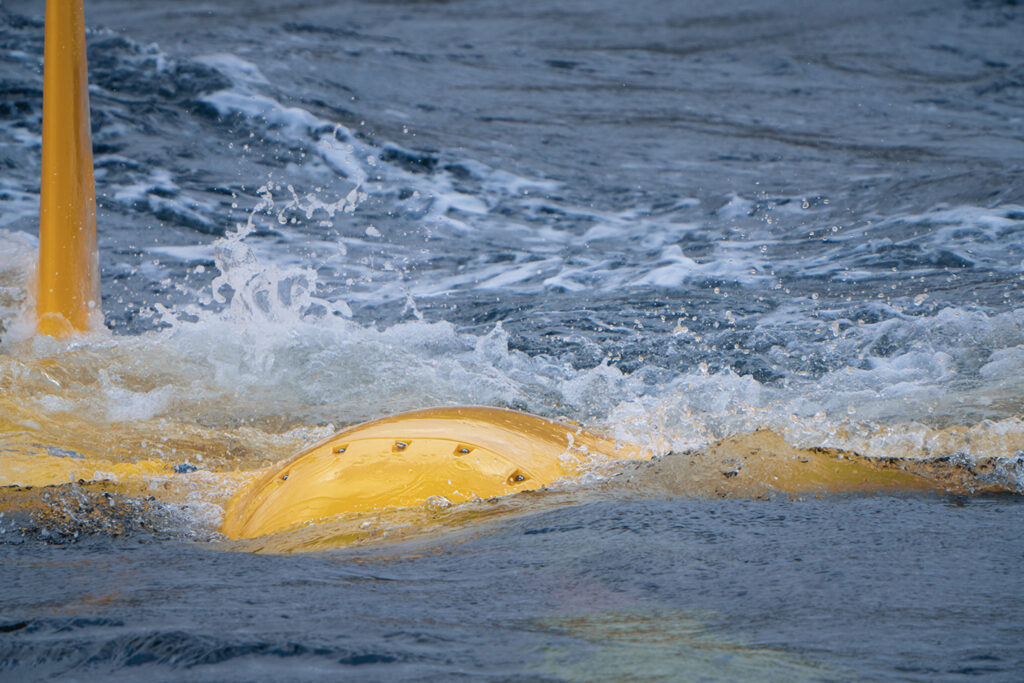
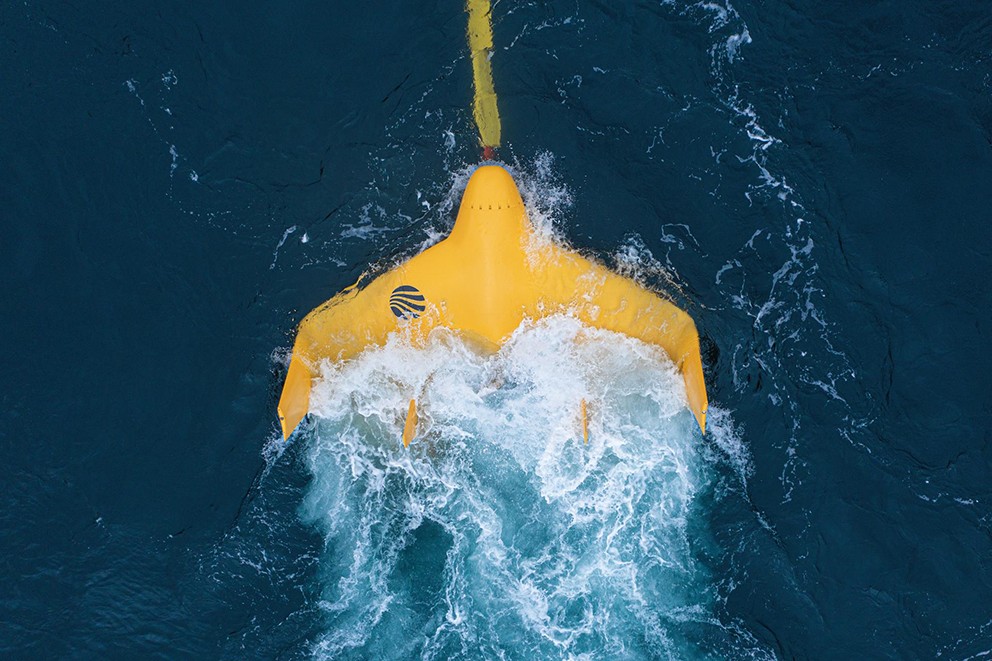
The SubConnected FLECS system brings
- A new generation of super dynamic lightweight Kevlar cables (<80mm 6kg per metre) at 33kV and 66kV in all sea conditions
- A unique patented spar hub for dry connecting multiple cables from devices and taking the energy to the grid connection
- The inter array cables never touch the sea bed or break the surface
- The dynamic export cable links the device directly to the grid or using the spar connection hub can link multiple devices to the grid.
- SubC through FLECS offers an innovative, proven and extremely cost-efficient cable and spar hub system from design to deployment with long life and low maintenance
- Key Advantages
- Marine Operations are faster and less expensive
- O&M and downtime is significantly lower
- Specifically designed for floating devices in harsh seas
- Significantly reduce capex, opex, downtime, maintenance and LCOE
- Developed for the W4P WEC deployed at Runde in 2017 the cable and spar hub is still in place and operable after 9 years
- Working with our partners the cable have undergone extreme longevity testing and simulations at RISE (Research Institute of Sweden) and Chalmers University of Technology